
Blog
Oct 09, 2026
How to create an online radio station: from your first broadcast to building your own audience
Estimated reading time: 10 min
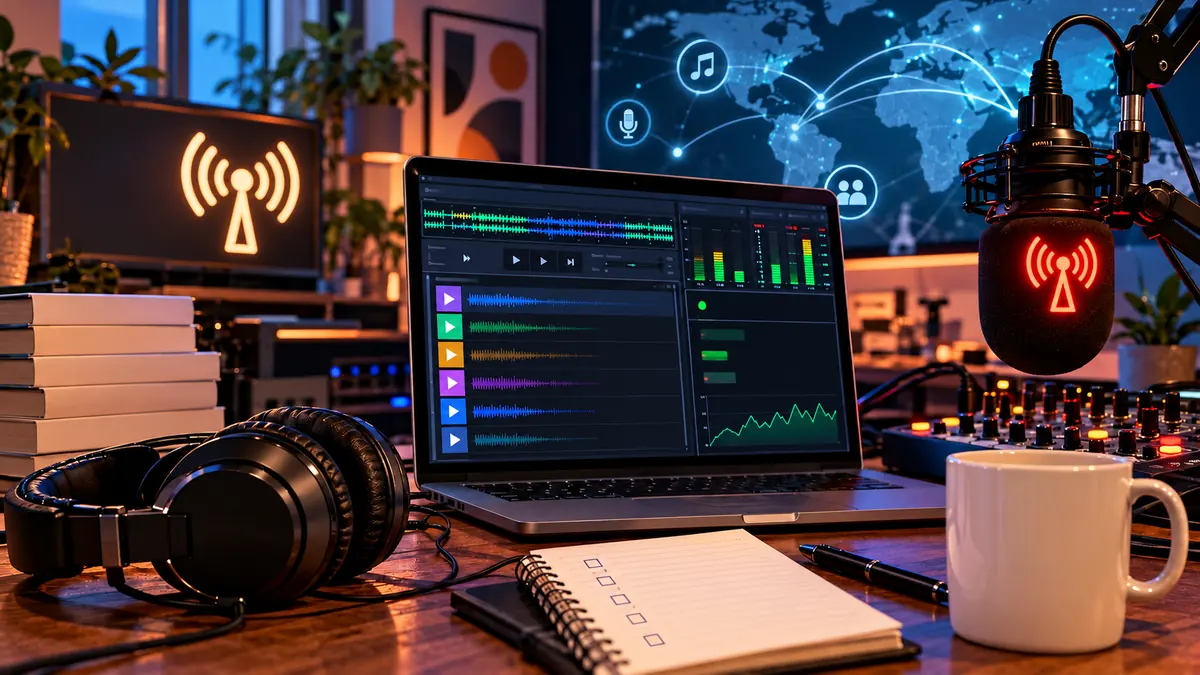
Setting up an online radio station no longer means renting a studio, buying a transmitter, or investing thousands of euros in equipment. Today, all you need is a computer, a stable internet connection, and a streaming server. The technical side has become much simpler. The hard part is still the same as ever: getting someone to want to listen.
Can you create an online radio station from scratch with no experience? Yes. You can even keep it broadcasting 24 hours a day without leaving a computer switched on. But before diving in, it’s worth understanding how streaming works, what software you need, and how much it might cost to keep the project running.
First, what kind of radio station do you want to create?
Not every station needs the same infrastructure. A station dedicated to electronic music can run on automated playlists, while a news station needs microphones, presenters, and a degree of editorial organization.
The first step is to define your content and audience. Do you want to broadcast classic rock, Latin music, interviews, or technology shows? The clearer your concept, the easier it will be to find interested listeners.
Trying to compete with major networks from day one by offering a bit of everything is usually a bad idea. A small radio station specializing in jazz may be more appealing to its audience than one mixing twenty musical genres without any clear direction.
Language, region, and schedule matter too. A station aimed at listeners in Spain won’t necessarily have the same peak listening times as one focused on Latin America.
What do you need to get started?
The good news is that basic equipment costs much less than it did a few years ago. You don’t need a professional mixing desk or a room covered in acoustic panels for your first broadcast.
With a computer, headphones, and a decent USB microphone, you can produce spoken-word shows at an acceptable quality. If you only want to stream music using an automated system, you won’t even need to use a microphone.
That said, there are three technical elements worth distinguishing: the software that sends the audio, the server that distributes it, and the player listeners use to tune in.
The computer prepares the signal, the server receives it, and listeners connect to it from their devices. It sounds simple because, in fact, the basic principle is.
The streaming server
Here’s where things get interesting. An online radio station doesn’t send audio directly from your computer to each listener. It usually uses a streaming server that receives an audio signal and distributes it to all active connections.
Some of the best-known technologies include Icecast and SHOUTcast. Both let you stream audio over the internet and are compatible with a wide range of broadcasting software.
There are also platforms such as Zeno.fm that offer hosting and management tools. Instead of setting up a server from scratch, you can create a station, get your connection details, and start broadcasting.
Is it better to pay for a service or install your own server? For beginners, using a specialist platform is usually more practical. Running your own server gives you greater control, but also means taking care of its maintenance, security, and connection capacity.
What about sound quality?
A common mistake is to assume that the higher the bitrate, the better the radio station. Technically, a higher bit rate can preserve more audio information, but it also increases data usage and the bandwidth required.
For a music station, 128 kbps in MP3 can be a reasonable starting point. If you use AAC, you can achieve similar perceived quality at a lower bitrate, depending on the encoder and the content.
The difference also matters on the server side. With 100 simultaneous listeners streaming at 128 kbps, the broadcast needs approximately 12.8 Mbps of outbound bandwidth for the audio alone, not including network overhead.
If the platform charges for data transfer, a growing audience can also increase your bill. Check the listener, traffic, and storage limits before signing up for a plan.
Software for live broadcasting
Once the server is set up, you need to send it the audio. That’s what broadcasting software, also called an encoder, is for.
Not all software does the same thing. Some programs simply capture and send audio, while others let you mix music, manage microphones, or automate scheduling.
Here are some well-known options:
BUTT: Lightweight software for streaming live audio to Icecast- and SHOUTcast-compatible servers. Suitable for getting started without too many complications.
Mixxx: DJ software with a mixer, music playlists, and streaming features. A good option for live music sets.
ZaraRadio: Automation software for organizing songs, station IDs, and programming. It may require an additional encoder to stream over the internet.
RadioBOSS: Commercial solution with automation, content scheduling, and broadcasting features.
To get started, BUTT may be enough if you already have your audio source ready. If you want to organize a complete music schedule, automation software will make more sense.
A radio station that never sleeps
Do you have to stay in front of the computer throughout the broadcast? Fortunately, no. That’s what Auto DJ systems are for, and they’re available with various radio hosting services.
It works simply: you upload audio files to the server, create playlists, and set a schedule. The system plays the content automatically, even when your computer is switched off.
You can schedule music by time of day, insert station IDs, and prepare themed blocks. Some platforms also let you switch from automatic mode to a live broadcast when a presenter connects.
The advantage is clear: your radio station can run 24 hours a day without relying on a home computer being left on all the time.
But automation doesn’t mean you can forget about programming. A playlist of 40 songs repeated for weeks may keep the server busy, but it’s unlikely to keep listeners interested.
The name matters too
Before publishing your station, spend some time on its identity. A short name that’s easy to remember and related to the content usually works better than an endless combination of words and numbers.
You’ll also need a logo, a clear description, and, ideally, a sonic identity. A station ID lasting a few seconds can help listeners recognize the station.
You don’t need to produce an intro worthy of a national network. It’s more important that the name is easy to understand, the volume of the station IDs is consistent with the music, and the station has a recognizable style.
It’s also worth checking whether the web domain and social media handles are available. Changing your entire identity once you already have listeners is never much fun.
Can you broadcast any song?
Here’s one of the less exciting but more important aspects: copyright.
Buying a song, downloading it legally, or paying for a music subscription doesn’t mean you have permission to broadcast it publicly over the internet.
Stations that play commercial music may need licenses covering musical compositions and sound recordings. The specific requirements depend on the country, the audience the broadcast is aimed at, and the rights managed by each organization.
In Spain, for example, organizations such as SGAE and AGEDI may be involved, depending on the use and the relevant rights.
What if you use royalty-free music? You still need to check the license. Some compositions allow commercial use and rebroadcasting, while others impose restrictions.
Before you start broadcasting, check which permissions you need. Having a working server doesn’t automatically make a music broadcast legal.
Where will people listen to your station?
Creating the signal is only half the job. The other half is making sure listeners can find it.
The most practical option is to have a website with an embedded player, information about the schedule, and links for listening on mobile.
You can also submit your station to online radio directories and aggregators. These services bring together stations from different countries and genres, making it easier for users to discover new offerings without already knowing their name.
For a station, the value of online radio platforms such as SpotWaveRadio lies precisely in reaching people who are already looking for audio content on the internet.
That said, every directory has its own requirements. You’ll generally need a stable, publicly accessible streaming URL, an identifiable name, the music genre, and an image for the station.
How do you get your first listeners?
Publishing a radio station online doesn’t guarantee that an audience will show up. You could have a flawless broadcast, an attractive logo, and a server capable of handling thousands of connections. If no one knows about the station, all that work will amount to broadcasting music to an empty room.
Promotion should start with the content. A recognizable schedule and consistent broadcast times help build listening habits.
It’s also worth making the most of social media, sharing show clips, announcing special broadcasts, and collaborating with communities connected to your musical genre.
Another option is to work on your search engine visibility. A page with useful information, an up-to-date schedule, and a specific description is more likely to appear in searches related to its content.
For example, a station specializing in classic salsa should clearly explain what music it offers, what language it broadcasts in, and what sets it apart from other stations.
Statistics can tell you a lot
Once the station starts getting visits, it’s time to analyze its performance.
Streaming service analytics dashboards can show simultaneous listeners, listening sessions, approximate locations, and peak activity times. The available features depend on each provider.
This data helps answer important questions. When do the most people tune in? Which shows hold their audience best? Are there listeners in other countries?
It’s also worth distinguishing between connections and actual people. The same person may listen several times a day or reconnect because of network problems, generating multiple sessions.
You don’t need to obsess over every figure. It’s more useful to look at trends over several weeks and adjust the schedule when there are clear reasons to do so.
Can you make money?
Yes, an online radio station can generate income, although it’s important not to confuse the possibility of monetizing with a guarantee of making a profit.
The most common models include audio advertising, sponsorships, commercial partnerships, and voluntary contributions from listeners.
Some providers let you insert ads automatically and share part of the revenue with the station. The terms vary depending on the platform, the plan you choose, the country, and the characteristics of the audience.
Is it worth running ads from day one? It depends. A small station with few listeners may earn very little while also harming the listening experience if it includes too many interruptions.
Before thinking about advertising, it’s usually more profitable to build a stable audience. Without listeners, even the best monetization system has little to monetize.
How much does it cost to create an online radio station?
The budget depends mainly on hosting, broadcasting tools, and the licenses you need.
If you already have a computer and use free software, you can run your first tests with very little technical investment. Some providers also offer free or low-cost entry-level plans, although these usually come with limitations.
Costs increase when you need more storage, more simultaneous listeners, your own mobile apps, or advanced automation tools.
You should also remember expenses related to the domain, website, content production, and music rights.
So before paying for an annual subscription, it’s a good idea to try the service, check that the player is reliable, and confirm exactly which features the plan includes.
So, is it worth it?
Creating an online radio station in 2026 is more accessible than ever from a technical standpoint. You no longer need to build a professional studio to get started, and streaming platforms have made much of the work easier.
However, a radio station isn’t built with software and servers alone. It needs a clear concept, well-organized content, and a reason for listeners to come back tomorrow.
The sensible approach is to start with a small schedule, check the signal quality, and publish the station on channels where people can discover it. Then you can expand the broadcast hours, upgrade your equipment, and consider monetization.
What if you only have ten listeners at first? That’s not necessarily a bad start. Ten people who come back every week may be more valuable than a hundred visits that leave after a few seconds.
Ultimately, technology makes it possible for anyone to put a radio station on the internet. Making it worth listening to still depends on the person behind the microphone.